The Paper Trail of a Home: What to Keep Together
A home records system groups documents by purpose and adds a brief index, so you can find useful details without mistaking paperwork for proof of condition.
A useful home records system groups paperwork by the question it answers, not by the date it arrived. That small choice makes it easier to locate a warranty, understand a repair, or check what a contractor was asked to do—without mistaking a tidy folder for evidence that the house is sound.
Think of the records as a map to decisions, not a verdict on the property. A receipt can show that a part was purchased; it cannot, by itself, confirm that the part was installed correctly or remains in good shape.
Group home records by the job they do
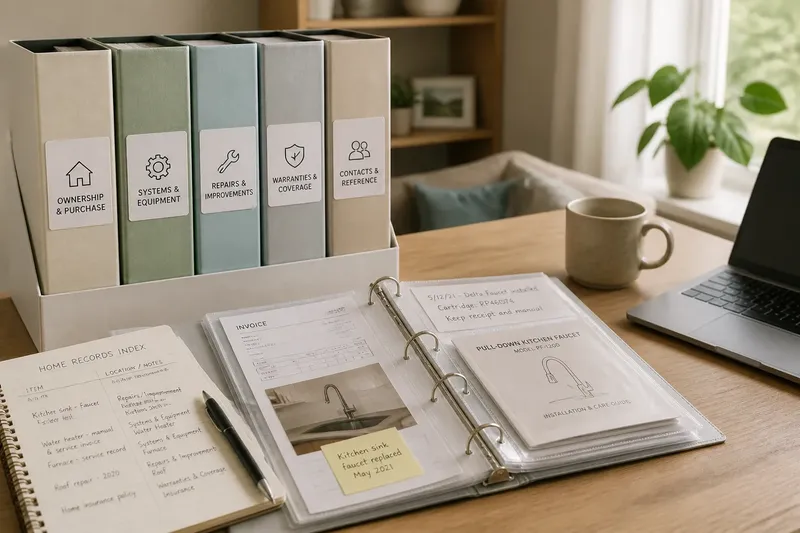
Start with broad purposes that match real household questions. A compact set of sections might include ownership and purchase, systems and equipment, repairs and improvements, warranties and manuals, and insurance or service contacts. Keep the names plain enough that another household member can choose the right section without asking you.
Purpose-based filing is more useful than a stack ordered only by year. If a sink begins leaking, you may need the plumber’s invoice, a product manual, and the note about a previous repair. Those records could have arrived years apart, but they belong together because they help explain the same part of the home.
- Ownership and purchase: closing documents, property disclosures, surveys, and records of changes in ownership.
- Systems and equipment: manuals, model and serial information, service paperwork, and installation records for items such as a furnace or water heater.
- Repairs and improvements: proposals, invoices, permits when applicable, and notes describing the work completed.
- Warranties and coverage: warranty terms, claim correspondence, and relevant insurance documents.
- Contacts and reference: service-company details, utility information, and a short directory of where key records live.
These are starting points, not mandatory folders. Combine sections that would otherwise stay nearly empty, or separate a category that has grown difficult to search. The useful arrangement is the one that helps people in the household retrieve and interpret a record.
Keep connected records connected
A document can answer one question and leave another open. An invoice may identify a repair and its date, while a manual explains the equipment and a follow-up note records what still needs attention. Store related items near each other, or make the index point clearly from one to the others.
For work on a specific system or area, a consistent label helps: “kitchen sink,” “roof,” or “furnace” is clearer than “miscellaneous service.” Preserve the original wording on formal paperwork, but add a simple description where it will help a future reader recognize the subject.
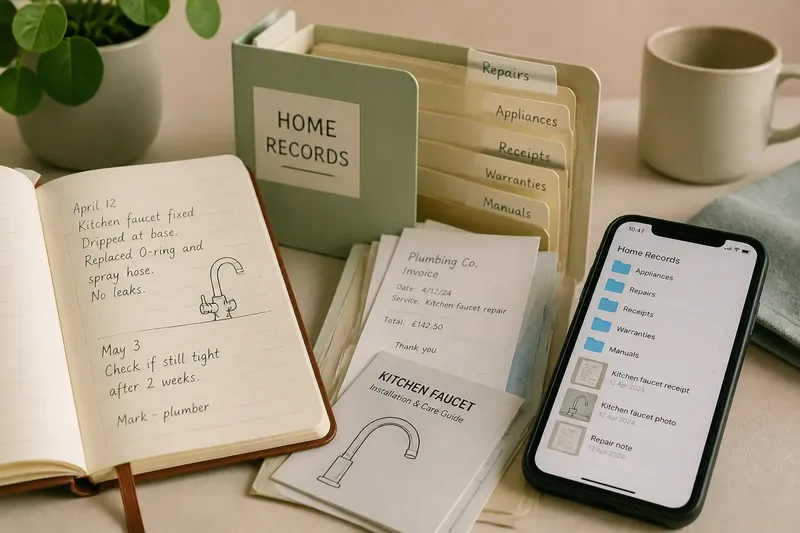
Imagine you replace a kitchen faucet and later need to identify its cartridge. You file the purchase receipt and installation invoice under “Fixtures,” then add “kitchen sink—faucet” to the index, along with the manual’s location. The expected result is a short route from the problem to the relevant documents, not a claim that the faucet is still functioning properly.
A brief index saves a longer search
An index is a small directory, not a second archive. For each useful record or group, note what it concerns, where it is stored, and any identifying detail that makes it easier to distinguish from similar paperwork. A few words can be enough: “water heater—manual and service invoice—Systems / water heater.”
For digital files, include the folder path or a clear file name. For paper, include the binder tab or envelope label. If a record exists in both forms, say so; otherwise, someone may search the wrong place and assume it is missing.
Keep the index short enough to update when something changes. If a document is moved, revise its location. If a system is replaced, make the new equipment easy to find and leave older records labeled as historical rather than quietly mixing them in with current information.
Make records understandable to someone else
A record system becomes fragile when only its organizer knows what the labels mean. Use ordinary terms, avoid private shorthand, and make the main index accessible to the household members who may need it. A brief note explaining the folder layout can help a partner, co-owner, or future caretaker find the right section.
Separate facts from assumptions. “Invoice states that the drain was cleared” describes what the document says; “drain is fixed” makes a broader claim. If you add personal notes, identify them as notes and keep them distinct from a contractor’s paperwork.
Not every scrap deserves a permanent home. A duplicate flyer, an expired appointment reminder, or packaging with no continuing reference value can add clutter without helping anyone make a decision. Keep records because they serve a purpose, not because every sheet of paper seems potentially important.
Home records do not certify condition
Paperwork can help explain a property’s history, but it is not an inspection. A maintenance receipt does not establish the present condition of a system, and a missing receipt does not prove that work was never done. Treat records as context to consider alongside what is visible, what a qualified professional reports, and the questions at hand.
This distinction matters when buying, selling, making an insurance inquiry, or deciding whether to arrange an assessment. Records can identify equipment, describe prior work, or show what someone reported at the time; they cannot replace an independent evaluation where one is needed.
Which home records should you keep close?
Should you keep every repair receipt?
Keep records that describe substantial work, recurring problems, equipment, warranties, or decisions that may matter later. For routine paperwork with no continuing use, follow your own storage needs and any applicable professional or local guidance.
How should you organize digital home records?
Use folders with the same purpose-based names as your paper sections, then choose filenames that identify the subject and document type. Save a readable copy, keep the index up to date, and use secure storage appropriate for sensitive personal or financial records.
What if you cannot find a manual or invoice?
Record what is known, such as the equipment name or the approximate period of a repair, and mark the missing item as unavailable rather than guessing. A manufacturer’s official site or the original service provider may be able to help identify a manual or copy.
Can a complete folder show that a home is in good condition?
No. Organized paperwork can make a property’s documented history easier to review, but it cannot establish current condition on its own. Use it as background, and seek a qualified inspection or other professional advice when the decision calls for one.
A well-kept home records system does not need to be elaborate: group documents by purpose, connect records that answer related questions, and keep a brief index that points to them. The most useful detail to preserve is often not another document, but a clear note about what the document does—and does not—tell the next person who opens the folder.